Showing posts with label International. Show all posts

Wednesday, 3 October 2018

Fix Vision 2030 accountability mechanism

The Vision 2030 National Development Plan was created in 2008, with the adaptation of the United Nation's Sustainable Development Goals (SDGs) in 2015, but there have not been any deliberative discussions or reviews by the central or local government until now.

The scope of the auditor general's report titled Jamaica's Preparedness for Implementation of Sustainable Development Goal's, published in September, included:

• an institutional framework for the implementation of the SDGs;
• resource allocation and capacity-building mechanisms; and
• strategies for raising awareness, monitoring and reporting on the progress of preparedness for SDG implementation.

The report points out several significant lapses in accountability that need to be with urgency by our nation's leaders, one of which is the need for a strengthening of the institutional framework that governs the Vision 2030/SDGs implementation.

According to the report, Planning Institute of Jamaica “assumed the lead role”; however, there was no documented evidence to confirm this role as the lead agency. Further, the auditor general found that the lines of accountability were unclear in the National SDG Core Group.

While we seek long-term funding for the full implementation of the SDGs, there must be a strong institutional framework that ensures our monitoring and accountability is well organised and transparent, or we will suffer mismanagement of resources.

 To this end, the report highlighted that the Ministry of Finance and Public Service has no representation on the national core group oversight committee, even though it has responsibility for collection and allocation of public revenue to allow for socio-economic development.

The report recommends that Cabinet considers “delegating overarching responsibility for coordinating the implementation”. This will “identify clear lines of accountability”. It also recommends “the formation of an internal mechanism to apprise parliamentarians of their role and the approach to be taken with respect to matters relating to SDGs”.

Although this audit did not examine SDG preparedness at the sub-national level, I wish to implore every municipal corporation to adopt this audit because SDG implementation at the local level translates to national sustainable development.

The whole of Government, including the Office of the Cabinet, must take serious responsibility for fixing these mechanisms that will serve us well long after 2030, as they seek to strengthen our long-term planning, monitoring and evaluation capabilities.

Monday, 10 September 2018

Rural Development Deh Back a Bush?

Image result for traffic kingstonAs the lives of those living and working in Kingston and St Andrew become synchronized with traffic detours, repaired water pipes, high rise buildings and a revitalization of downtown - these major infrastructure works would make any rural citizen like myself ask ‘wah bout us?’

It is not entirely far-fetched to consider that rural development is a back burner or just a side panel issue, many have lamented for years the state of rural communities not in mountainous regions left to in the dark ages literally, still without electricity or indoor plumbing. Communities where farm roads are still donkey tracks and you walk a mile to get public transportation. We rural folk who travel great distances to the nearest major town to access necessary services like utilities, banking, groceries, etc.
Image result for donkey track jamaicaGoal 11. Sustainable Cities and Communities of the encourages policies and plans that promote positive and stronger connections between urban, peri-urban and rural areas by linking sectorial policies that affect national, regional and local governments. If we are serious about attaining any success with Vision 2030 and the United Nations Sustainable Development Goals (UNSDGs) then leaving no one behind must become an integral part of our development processes.


Image result for rural development in Goal 11While I’m privileged to be living in one of those major scheme developments near Old Harbour, this in itself presents a few challenges for the existing public infrastructure, environment and social fabric of the area. Within the last decade or so there have been at least 4 major phase developments adding to housing stocks in between Spanish Town and May Pen, mostly focused around the town of Old Harbour. The 2 largest being New Harbour Village and Longville Park still adding phases with Colbeck Castle development expecting to add another 8000 homes.

There have been no ‘announcements’ from any public entity on development plans for upgrading the existing infrastructure that supports these newer and older communities, will the water supply and sewage be able to withstand the needs? Will there be road expansions and better traffic management? How will security improve?

With the increased usage of these former farms and “idle” land, we are altering ecological structures as we accelerate the conversion of rural land into urban uses – which becomes environmentally unsustainable. What kind of fauna and flora is being displaced?

The necessary public facilities to maintain human settlement and development also come under extreme pressure, local schools and health facilities cannot handle the volume of students and patients.

Image result for longville park clarendon jamaicaWhen will rural development be in the spotlight and given the sustained effort it deserves?

Where is the Local and Central Government representation?

Wednesday, 9 December 2015

Haiti Elections 2015: Political Intervention, CARICOM Deficiencies & Missing Aid

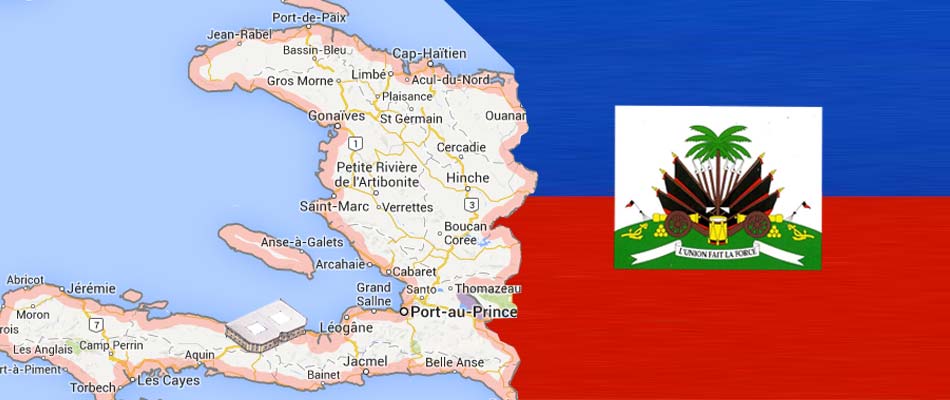
Map of Haiti/Haitian Flag
It is no secret that elections underway in Haiti have been filled with allegations and reports of wide spread fraud, intimidation, violence, external interference and general corruption; all are components of past and recent Haitian democratic processes.

But with the Nation still recovering from a devastating earthquake that only served to weaken its public institutions, the United States' State Department has taken guidance over the current presidential vote, with CARICOM merely an observer to the proceedings.
Democracy Protests

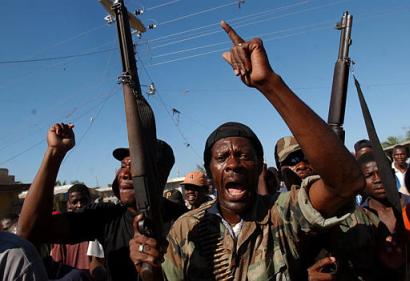
Even as the State Department overlooks the process there are further reports of misconduct among the political actors only adding to growing unease of the common Haitian and placing democracy further away from them.This has led to on/off clashes between democracy protesters and Haitian security forces before, during and after the voting in August and October. Voting continues in December with still occurring clashes daily.

Haiti Special Coordinator Kenneth Merten 
In his teleconferenced remarks on November 16th about the Haiti elections, Haiti Special Coordinator Kenneth Merten acknowledged "the disagreements" among the political players then stated "the good news is that the elections are taking place" and response to a question asked by the moderator Dr.Theramene(Haitian Americans for Progress) to elaborate on whether or not there is political interference by his government, Merten explained "We will work with whoever or whatever president comes out of this process." Even if 900,000 party monitors received credentials to vote at multiple voting centers.


Haiti Military Coup
His statement falls inline with the subvert quarters of US foreign policy which is protect their interest though by inducing "stability" - the key word - in simple terms, the works of democracy are shelved for a government, any government so that business as usual may carry on.


The flip side to that shortcut approach is that the peoples dissatisfaction and the governments spoon fed power often end up clashing and this creates instability leading to what we saw in Haiti before in the military coup..


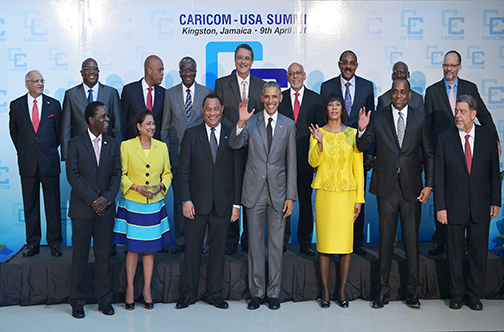
POTUS Obama & CARICOM PMs

The United States(US) is apart of a Core Group in Haiti and as stated by Merten, that includes Brazil, Canada, France, Spain, European Union and representatives of the OAS; the US has the major influence and is working accordingly.With the US committing $31 Million to support election activities its not too cynical to say they will expect value for their money.


Why CARICOM's Limited Role?


The group with least influence though and seemingly with the least interest in the Haiti's current critical democratic redevelopment is the 'regional' body: Caribbean Community (CARICOM) and the Caribbean people, with little to no Caribbean media coverage of the current events.


Not to unfair to the regional body and its people, CARICOM past actions of support for Haiti count as admirable between the banning of illegitimate Latortue government, Aid, observer missions to recent support against Dominicans Republic's policy making Haitian descendants stateless.

Although most of the electoral observer missions were joint operations with the Organization of American States(OAS). CARICOM  has once again limited itself to spectator seat of a overheated election.


The Caribbean media on the other hand seem to have descended past the usual local market driven news content when it comes to Haiti with almost a complete black with most content coming from extra regional sources.I will not question the news editor choices but only urge newsroom rooms regional to encourage regional interest of some sort.


But Haiti has long been wrongly classified as the stepchild of the Caribbean and continues to be seen as economically 'dispensable' and a "burden"  to CARICOM. Although Haiti's relationship with the organisation has not been steady since its admission in 1999 there is no question in my mind that this is a critical juncture for Haitians in their redevelopment.

CARICOM needs t be ready to gain and have greater influence for the strengthening of a regional integration with shared values,similar economies, common culture and geopolitical interest the reasons deepen Haiti-CARICOM relations out weigh disadvantages.


CARICOM's ability to intervene as the regional overseer is hampered not only by financial andresources restraints but by its own unwillingness to create powers to intervene beyond strong worded statements and the cold shoulder:

Hon. Dr.Kenneth Anthony

Hon.Dr.Kenny Anthony of St. Lucia noted in a speech delivered in 2001: "The organization [CARCOM] is not fully seized of the significance of its involvement."   

This calls for reform and restructuring of the regional organization to better suite the current regional integration unions and political-economic area blocs that supports wider influence locally, regionally and internationally.

C.Grant states in his 2007 paper for "Intervention, Border and Maritime Issues in CARICOM" entitled "CARICOM:Non-Intervention & Intervention" that

“While the current diplomatic modus operandi has served the Community reasonably well, there is the need for indicators for intervention to be developed and for a formal institutional mechanism to mediate political conflicts among stakeholders in the political process of the various Caribbean states to replace the reliance on ad hoc interventions such as those utilized in Guyana and St. Vincent and the Grenadines.”

Humanitarian Fail: Where are the Missing Aid Funds ?

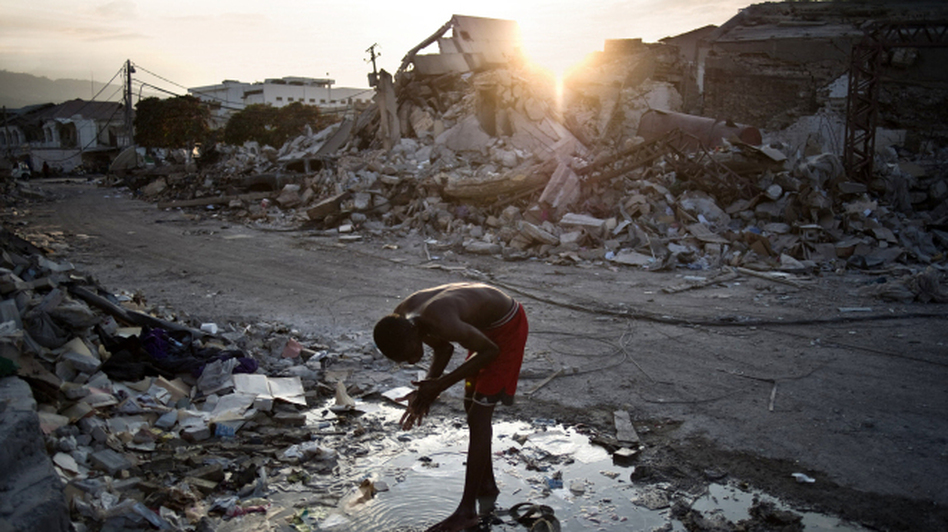
Haiti 2010 Earthquake Aftermath (NPR)

I end on an extremely sour humanitarian note that concerns Haiti's aid pledge; Its reported that of 15 000 homes promised to be built only 900 have been delivered, US $7.6 billion has been disbursed and little to show for it, lack of accountability leading to corruption surrounding aid, relief and rebuilding expenditure means the many of those suffering from the 2010 quake are still in tents, on the streets, children not attending school, living conditions and hygiene at inhumane levels.


By all means Haiti is still in the midst of a Earthquake and its allies lead by the US and CARICOM are not back to pre-2010 misconceptions, mistreatment and disregard of Haiti-Pearl of the Caribbean and the free Haitian people.

Saturday, 21 November 2015

#AllLivesMatter from Paris to Raqqa

Firstly, any acts of violence perpetrated against any person or a people should be offensive to our humanity and the impact not to be diminished. 

We must condemn these horrendous attacks done in the name of religion and stand resolute with our French counterparts especially the youth.

In showing your support you might be one of the millions of people across the world showing solidarity with the people of Paris, after the recent terrorist attacks by using the French flag photo
filter on your social media accounts. The level of social awareness at an all time because of social media and it connectivity that reaches beyond boundaries and borders, allowing us to react, empathize and sympathize simultaneously as events occur in different parts of the world.

With many of us choosing western mainstream media outlets that are often for domestic markets like CNN – we end up not receiving the deeper coverage of stories that accompanies internationally focused media. This is inadequate for the formulation of balanced views and interpretation of world issues, it therefore leads me to submit that the current show of solidarity and outcry has been woefully disproportionate to the impact of terrorism and the so called ‘war on terrorism’ when comparing west and east.

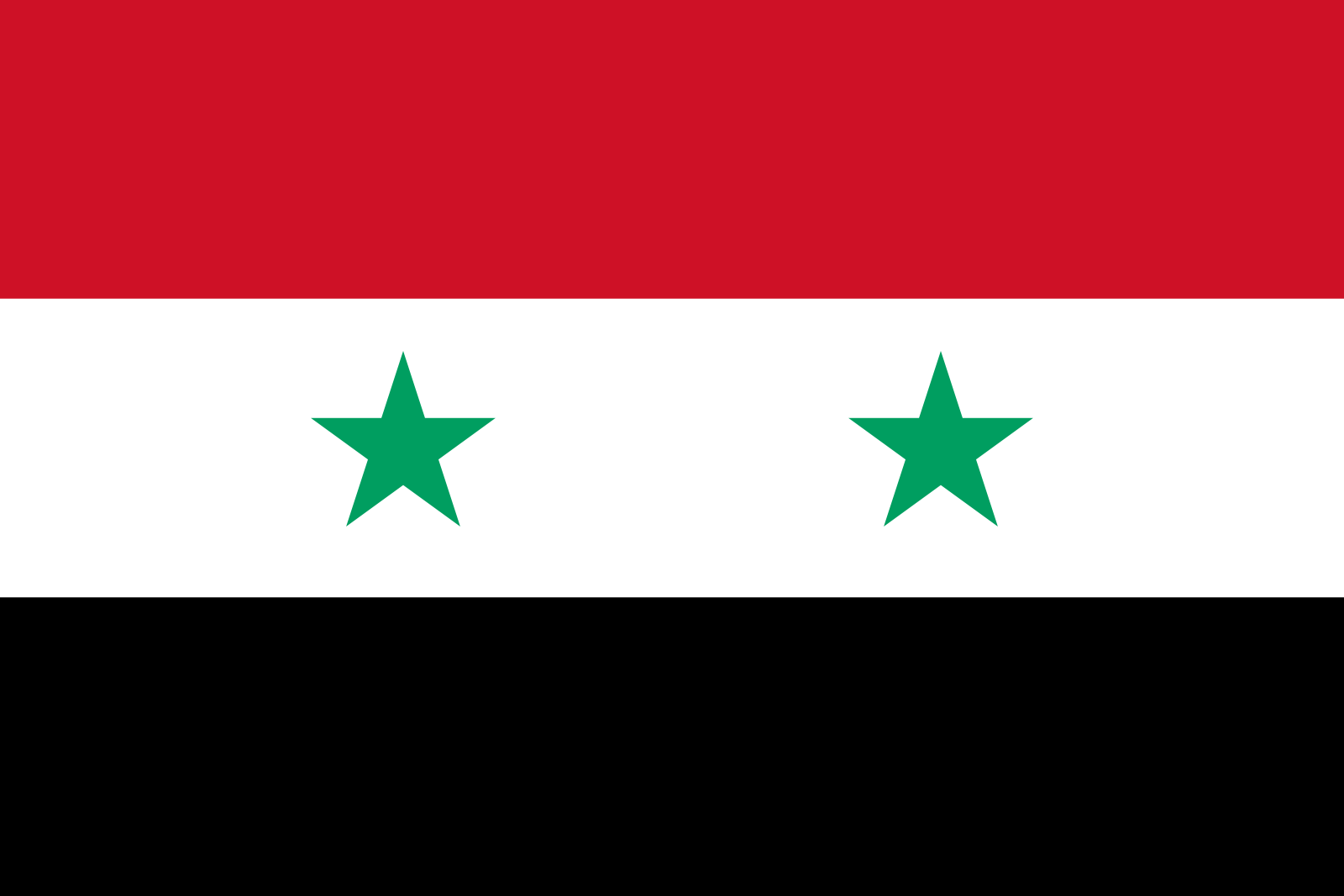
Why I chose a Syrian Flag Filter?


Although the Refugee crisis gains considerable coverage, it still is being referred to as a “migrant crisis” – with the highlights being Europe’s response not the basis of the crisis that has led over 9 Million Syrians to leave their homes from the start of civil war in 2011.If you get pass the surface of mainstream reporting, there are facts and data that gives insight into the true devastation of terrorism and the war against it. 
The Institute of Economics and Peace (IEP), in its Global Terrorism Index 2015 states that, “terrorism remained highly concentrated in just five countries, with Iraq, Nigeria, Afghanistan, Pakistan and Syria accounting for 78% of terror-related deaths in 2014.” 


The town of Raqqa in Syria is the stronghold of Islamic State and has been completely destroyed by the ongoing civil war, IS and bombings by the US, Russia, France and other allied forces. Hospitals and schools are nonexistent at this point.


While the reasons for the filter is to make us feel better about our own inaction or inability to change the world but let’s not put a western cap on our solidarity. 

Tuesday, 19 May 2015

TPPandTheCaribbean: Trans-Pacific Partnership Facts and How the Caribbean will be affected

Mainstream Messed Up

Before I do delve into 'the need to knows', I must call out any mainstream media that either under-reported this issue or ignored it, but I am especially disappointing in the Jamaican mainstream media as they have left the Jamaican masses especially the disfranchised  members of the society who have no other resources other than the mainstream media be it print or electronic to enlighten them about local and global affairs.

There is no for the media not follow and report on such a established topics such as the Trans-Pacific Partnership (TPP) and the other less popular United States(US)-EU(European Union) Transatlantic Trade and Investment Partnership(TTIP). Even as Pres. Obama maneuvers his Trade Bill  through the US House of Representative and Senate that would see the implementation of the TPP in the US within a period of 6 years, along with other negotiation nations from the Americas include: Mexico, Canada, Peru and Chile. 


TPP Members 

TPP Facts

What is the Trans-Pacific Partnership 

The TPP or TPP12 is an a game changing  Free Trade Agreement that was originally signed by Brunei Darussalam, Chile, New Zealand and Singapore under its former name "Trans-Pacific Strategic Economic Partnership" and came into effect in 2006 with a vision of comprehensive trade liberalization being implemented by 2015, but between 2010-2013 the other 8 nations( including Japan, Australia, Malaysia,Vietnam) had joined led by the USA, of course making it 12 nations in total. 

TPP Objectives

The TPP stated objective is  to achieve extensive liberalization of both goods and services, and entails comprehensive coverage of trade in services, investment, government procurement, non-tariff measures, and many other regulatory areas 
including Intellectual Property.

Size and Power  

This Partnership is looked upon as another geopolitical power struggle between the US and China's emerging influence in the Americas and Asia-Pacific hence we must asses its economic size and power to really gain an appreciation of its impact on global trade, but also consider the possibilities of more Asian-Pacific nations joining the TPP.

Although the United State is almost twice the size in population and economy of the other members: Trade among TPP partners amounted to more than $2 trillion in 2012, which can be compared to World Trade Organization (WTO) global trade valued $18.3trillion for that period, TPP trading would equal 11% of all trade.

TPP nations are a 40% share of all United States world trade with the North American Free Trade(Canada,Mexico,USA) and Japan the majority of that trade.

In terms of populations according to the Population Reference Bureau (PRB) 2014 World Population Data Sheet, .the total American TPP members which stands at 555 million, more than half the total population of the Americas (971 million), is significantly larger than the Asian population figures which amount to no more than 256.6 million (285 if you add Australia and New Zealand), compared to Asia’s total population of 4.3 billion: almost half of the Asian contingent is accounted for by one member, Japan: Converted to percentage of worlds population would be 12%.

Criticism and Concerns 

Opponents of the Trans-Pacific Partnership says its a secretive, multinational trade agreement that threatens to extend restrictive intellectual property (IP) laws across the globe and rewrite international rules on its enforcement. 

The fear the deal may extend the scope of patents in sectors such a medicine and prevent the distribution of generic drugs.

With the certain deregulation of the Private Sector seen also as negative by pro consumer advocated; there will easier flow of companies and their revenue, leading to possible loss of  employment and outsourcing of local jobs.

Continued currency manipulation by some members;currency manipulation is characterized by persistent current account surpluses, and accumulation of massive quantities of foreign currency reserves.

And with the rigidity of trade and harmonization regulation to ensure equality being proposed, opponents say that smaller economies will have less room to grow and develop.


How TPP will Affect The Caribbean


The  magnitude of the affect that the Trans-Pacific Partnership is still hard to predict as nations still negotiate and hence we await the final agreement, if they are successful in reaching there:
The European Center for International Political Economy(ECIPE) report: "Mega-Regional Trade Agreements: IMPLICATIONS FOR THE AFRICAN, CARIBBEAN, AND PACIFIC COUNTRIES" has provided some insight into how these two Free Trade Agreements would affect the African, Caribbean and Pacific(ACP) countries and provided some recommendations going forward:
For the Caribbean specifically, ECIPE said that the TPP may have a significant impact on trade, with the USA accounting for close to 35% of the Caribbean’s exports while the EU and the rest of the TPP account for 11% and 8% respectively. 

Also that there are a number channels through which mega-regional agreements such as the TPP can impact on ACP countries. The first is the direct effect that mega-regional agreements can have on existing ACP access to EU and USA markets on preferential terms not available to middle and high-income countries. The second channel is the impact that the reduction of non-tariff measures and the harmonization of standards within the TPP can have on either raising or reducing export costs for ACP countries. 

What Must We Do

Some ECIPE recommendations for ACP countries include:

ACP countries continuing to push for increased and more targeted aid for trade, development and should also bolster their domestic systems for receiving and utilizing this assistance these tools should be used to cater for the country’s domestic institutional, political economy, and governance constraints.

Conducting national assessments of how we are positioned in the mega regionals “game”- domestic reform imperatives could best be pursued so that the country is not left too far behind.

Strengthening and widening regional economic integration:  enlarging the regional economic space will provide some attraction to outside investors, particularly if the transactions costs of accessing regional markets can be made less burdensome or, even better, attractive.

Without "high-level" government and policy intervention Caricom and its Caricom Single Market and Economy (CSME) will be on the receiving end of whatever trade deals, regulatory  changes, environmental and intellectual property rights agreements result from this new arrangement with no way out. 

Next Time we analyze the Transatlantic Trade and Investment Partnership(TTIP).


Monday, 13 April 2015

Anti-Terrorism Gone Astray: Secret Resolution, Commitment, Denial and Proof(Maybe)

Secret Resolution (Sept. 24, 2014)


Almost three weeks had passed last year after the Jamaica had co-sponsored a United Nations resolution at the 69th session at the assembly in September to condemn the Islamic State(IS) militants and lead to the blocking of IS recruits from travelling to the battlefields and returning home to radicalize others. 
The Resolution 
was approved September 24, disclosure by Government October 10, 2014 - 12 days..
"So, why not at least a brief information-oriented statement for the benefit of the Jamaican people and their Caricom cousins as well?" (Jamaica Observer 05/10/14)

UN
Was the question posed by bajan Rickey Singh in his analysis of the Jamaicans government's "public silence" on the resolution.

The Jamaica Observer article on 09/10/14 headline read: 

Jamaica co-sponsors ISIS resolution

Opposition blasts Government on non-disclosure of UN participation

In the article the opposition Jamaica Labour Party is quoted saying

"the Government must recognize that the nation’s foreign relations  is a public matter which must, at all times, reflect the views, hopes and aspirations of its people, and the decisions taken on behalf of the people must always be fully transparent."

Commitment (October, 10 2015)

Minister of Foreign Affairs Sen.AJ Nicholson
The Government via foreign affairs Minister Senator AJ Nicholson made the claim in the Senate after some probing by the opposition that

 Jamaica supports efforts to continue to give priority attention to combating the spread of terrorism, including focusing on finding a multidimensional and comprehensive approach to the problem.  (Jamaica Gleaner 10/10/14)

and also 
 considering its position, Jamaica had to take into account the geopolitical context in which the resolution was being tabled. The minister said terrorism in all forms constitutes a grave threat to international peace and security.(Jamaica Gleaner 13/10/14)
During that same Senate sitting the minister was asked by Opposition Senator Robert Montague on what would be done if Jamaican was taken hostage by terrorist - the Minister replied "What you want us to do, send the JDF (Jamaica Defence Force)?"


Denial(March 15, 2014)

  
Min. National Security MP Peter Bunting
Thus far this year that support seems to be dodgy at the least, taking into consideration the posture of the administration after reports surfaced from US Military intelligence that Jamaicans maybe apart of IS recruits from the region -  the National Security Ministry was quick to dismiss and chastised the Commander of the US Southern Command General John Kelly for not following his script; 

National Security Minister Peter Bunting said the prepared text of the speech delivered by General Kelly did not name Jamaica and, as a result, the reported comment may be the result of a misunderstanding. (Jamaica Gleaner 15/04/15)

the US has however said no mistake was made  and  double downed on the statements  made by General Kelly

a spokesman for the US Southern Command in Florida, Jose Ruiz, tells Nationwide News that General Kelly did not make a mistake. (Nationwide News 17/04/15)

Proof(Maybe) (April 6,2015) - (April 12,2015)


ISIS
It will be interesting to see how the Jamaican authorities treat this incident but also if this indeed a case of terrorist recruitment: how did this young man slipped through the mechanism that are/supposed to be in place according to resolution that

also urged members to intensify and accelerate the exchange of operational information regarding actions or movements of terrorists or terrorist networks through bilateral or multilateral mechanism


  • Wasn't the same "Intelligence Agency" garnered by Suriname available to Jamaica?
  • What does Jamaica have in place get, utilize and share the intelligence?
  • Why isn't there a single database of a "no fly" designation by the region?

and many other questions must be answered... as another Jamaicans ISIS was made some days  before 

  In any case we've seen the failure/weaknesses of nations in the Caribbean region to fully cooperate and integrate sharing of intelligence that is crucial in stopping terrorism and transnational crime.